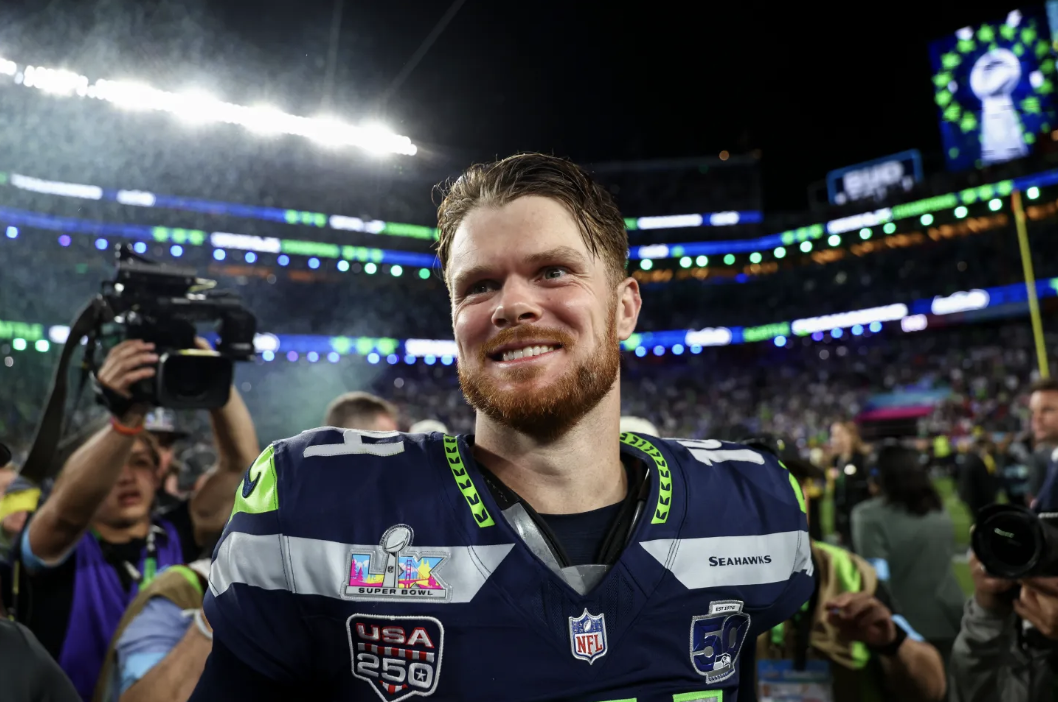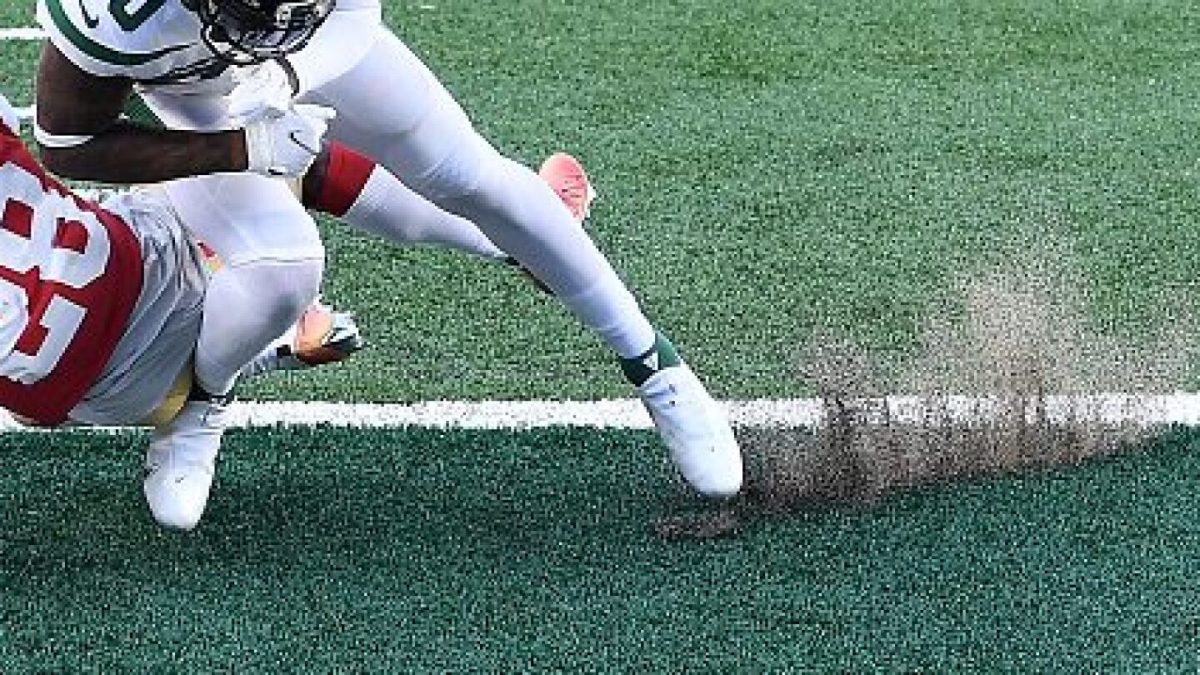
MetLife Stadium, home to the New York Giants and Jets, in recent years has been singled out in the media due to a series of serious knee and Achilles injuries that have occurred at the venue. NFL stars like Nick Bosa, Aaron Rodgers, Wan’Dale Robinson, and Malik Nabers are one of many players to have season ending and/or career altering injuries on the stadium’s FieldTurf surface. Is there some curse on that field like social media proposes, or is there some science behind the MetLife turf curse?
Across the NFL there has been widespread fear of artificial turf harming player health. This fear has good reason, as artificial turf is proven to cause more lower-body injuries than natural grass. A multi-year study on NFL injuries found that over 60% of season-ending lower-extremity injuries occurred on turf (Yeager and Tsavaris), however it’s important to keep in mind that only 53% of NFL stadiums use turf (turf is much cheaper than regular grass to maintain). However, after factoring in the number of games played on turf, the number of snaps played on each surface, along with other factors, the NFL Players Association (NFLPA) concluded that non-contact lower-extremity injuries are 28% higher on turf. More specifically, the NFLPA stated that the chance of non-contact knee injuries increased by roughly 32% and foot and ankle injuries surged by 69% when playing games on turf (Tretter).
To understand why turf in general increases the risk of injury for NFL athletes, it’s important to break down the mechanical properties of these surfaces and the anatomy of the human body during common football motions that cause these injuries.
Artificial turf affects knee biomechanics during high-demand actions like change in direction, which is the most common movement that leads to ACL injuries. Compared to natural grass, turf is harder and stiffer, which forces players to apply a greater load on
their knee ligaments to generate the same movement because of the fact that the studs in their cleats essentially dig in and get stuck in the artificial fibers of turf. Turf systems were therefore found to create higher rotational traction between the player’s cleat and the surface (studs are stuck in the artificial blades of grass). This excessive rotational traction results in greater peak torque (twisting force) in the knee when athletes pivot, raising the likelihood of non-contact ACL sprains and tears.
Beyond rotational forces, turf also alters knee extensor moments and posterior braking forces during a sharp “cutting” movement. These changes are a forward movement of the shin that puts extra stress on the knee that overloads the ACL (Deopujari and Kiel), as seen most recently by Malik Naber’s season-ending ACL tear. In the case of Nabers, who beared down on his right leg, digging with his cleat into the turf, to stop his forward motion and cut in to catch a ball, the force applied to his knee ligaments was too great causing a tear from extensive forward force because his cleat and shin were essentially “stuck” to the turf. So, while it might seem counterintuitive, the “magic” injury prevention nature of natural grass is actually its slipperiness, leeway, and ability to essentially bleed off some of that energy.
In fact, biomechanics reveals that humans will unknowingly adjust their movements when moving on turf. On turf, the body is forced to increase its center of mass velocity and will exhibit greater ankle plantar flexion to maintain stability which means that there needs to be a greater effort to return the same amount of force during rapid cuts or directional changes. Essentially, the body compensates for the way turf grips, which alters our stride mechanics, joint motion, and overall movement patterns.
These subconscious adjustments, while aimed at performance, can inadvertently place extra stress on ligaments and joints.
So, it’s been established that turf is dangerous for players as a whole, but why has MetLife stadium been singled out? The amount of turf infill, density, and compaction of a specific stadium’s turf can alter the surface stiffness which in turn can alter the stiffness and traction, increasing resistance to cleat release during rotation. Meaning that some turfs can amplify lower limb joint loading.
The most common turf infills for NFL fields are Viscoelastic (materials that exhibit both solid-like elastic and liquid-like viscous properties) infills, such as SBR (styrene-butadiene rubber), EPDM, and even cork. After the 2020 season, MetLife stadium replaced their turf system with FieldTurf CORE which uses multiple layers of dual-polymer fibers, however multiple other fields use the FieldTurf system. Stadiums like Ford Field, Mercedes-Benz Stadium, Gillette Stadium, Lumen Field, and plenty more all use the FieldTurf system. But, there’s one more key point. Unlike most NFL venues, MetLife is one of the only stadiums to host two NFL teams, the Giants and the Jets, meaning the surface experiences double the snap count and amount of plays. This constant usage leads to faster infill compaction (meaning the little turf bits are being smushed together to become harder), which, as biomechanical studies suggest, increases surface stiffness and heightens the rotational traction that keeps a player’s cleat “stuck” during a pivoting motion.
Ultimately, the science suggests that the “curse” is not some evil magic, but a twofold byproduct of surface-athlete interaction. While natural grass provides a “safety valve” by allowing the grass to give way under extreme force, the high-friction
environment of MetLife’s turf demands that the human body and more specifically the ACL and Achilles absorb the entirety of that energy. And, while we hope to never see our favorite players limping out of the stadiums, at least now you’ll know it wasn’t the Grass Boogeyman that caught them, it was simple biomechanical science and the consequences of prioritizing price over player health.