The day after the final slate of NFL regular-season games is often referred to as Black Monday. This day is notorious for head coaching firings, as team ownership holds discussions about their team’s future and who they wish to lead them into next season. When Black Monday came this year, two NFL head coaches had already been fired: the New York Giants’ Brian Daboll and the Tennessee Titans’ Brian Callahan.
Since then, a total of 7 coaches have followed Daboll and Callahan out the door, four of whom were let go on Black Monday or the previous day. These coaches include the Cleveland Brown’s Kevin Stefanski, the Atlanta Falcons’ Raheem Morris, the Las Vegas Raiders’ Pete Carroll, and the Arizona Cardinals’ Jonathan Gannon. If you look at the combined records of these four head coaches this year, 19-49, their dismissals generally make sense.
However, the departures of two other head coaches since the end of the regular season have shocked the league and brought into question how NFL teams view success as franchises.
First, two days after losing a winner-take-all game against the Steelers that would have sent the team to the playoffs, the Baltimore Ravens announced that Head Coach John Harbaugh had been let go. Harbaugh coached the Ravens for 18 seasons. In those 18 seasons, the Ravens made the playoffs 12 times and won 13 playoff games, including winning the Super Bowl in 2012. Given his successes with the Ravens, Harbaugh’s firing came as a bit of a shock for fans and football analysts alike. The main reasoning behind this move is speculated to be the Ravens’ performance since drafting Lamar Jackson in 2018. In his eight seasons in the league, Jackson has been a four-time Pro Bowl selection and won two league MVP awards, cementing his status as one of the premier players in the NFL. Despite Jackson’s stellar performance since coming into the league, Harbaugh’s Ravens have failed to capitalize on his star power, putting up a mere 3-5 record in the playoffs with no Super Bowl appearances. With the Ravens, Harbaugh finished with a 180-113 record, making him the winningest coach in franchise history and cementing his legacy as one of the league’s greatest coaches. However, this wasn’t enough for the Ravens’ brass, who viewed no Super Bowl appearances with Lamar Jackson as unacceptable, leading to Harbaugh’s dismissal.
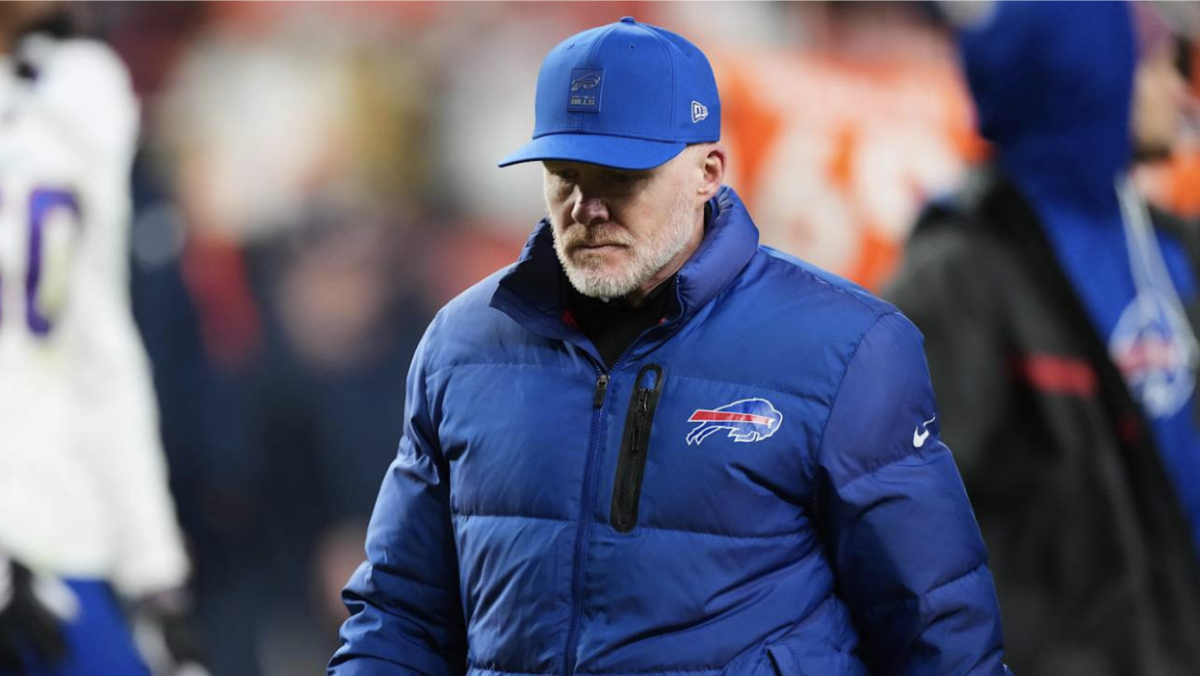
Next, Sean McDermott was let go by the Buffalo Bills after an impressive nine-year stint with the franchise that included eight playoff appearances and a 98-50 record. The circumstances leading to McDermott’s firing are very similar to Harbaugh’s. Like Harbaugh, McDermott had a star quarterback leading his squad—2024 MVP QB Josh Allen. However, similarly to the Ravens, the Bills only accrued a playoff record of 8-8 under McDermott, also failing to make a Super Bowl appearance. McDermott’s dismissal came especially as a surprise given the Bills made the playoffs this year, falling in the AFC Divisional round to the Denver Broncos 33-30 in a thrilling game that went to overtime.
Under Harbaugh and McDermott, the Ravens and Bills became two of the most consistent winners in the league. Their playoff appearances alone are more than some teams have had in the history of their franchises. But once winning became the norm, the bar was set higher for their head coaches as well. Regular-season dominance and annual playoff appearances simply weren’t enough without a Super Bowl to validate them. Ownership and fans alike were left unhappy and unsatisfied with their teams’ performances once again.
Not every franchise plays by the same rules. For some, breaking a playoff drought counts as progress. For others, losing in January counts as a collapse. The NFL’s definition of success is becoming increasingly subjective, shaped by star players, time, and expectations. The real question going forward isn’t who gets fired, it’s what standard they’re being judged against. Only one team hoists the Lombardi Trophy at the end of the season. If the Super Bowl becomes the only definition of success, then 31 teams, and their coaches, are destined to fail by design.