Before spring break, Saul Malek, a leading gambling awareness advocate, spoke to the University School community. When telling us his story, he made particular note of the moment when he really realized that he needed to get help with his sports betting addiction. Someone online told him that he should bet one dollar each day that it would snow in Qatar. It is quite unlikely, said the online sage, but when it finally snows, you will become rich.
Mr. Malek believed him and searched high and low for an online space to bet on the weather in Doha. When he came up empty, he went back to the person who had given him that advice in the first place, who said that it was all a joke and that Mr. Malek should get help.
Luckily for Mr. Malek, at the time, there was no place to bet on Middle Eastern weather, and he was able to successfully seek help and become a traveling speaker. However, unfortunately for the rest of us, there is now a place to bet on this exact thing.
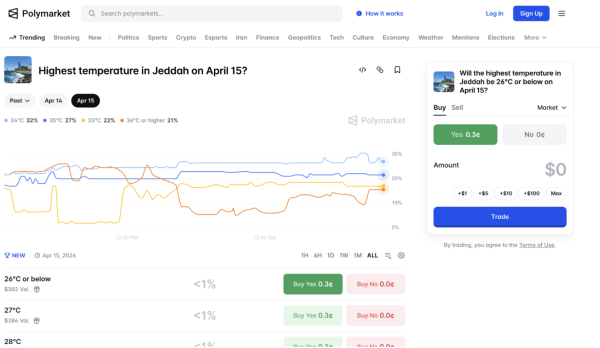
Polymarket market for the daily temperature in Jeddah, Saudi Arabia (captured 4/14/26)
“Prediction Markets” such as Polymarket and Kalshi offer the opportunity to gamble on much more than traditional betting sites like DraftKings and FanDuel. Users can place bets on everything from the 2028 election to what words certain important figures will use in public announcements or posts.
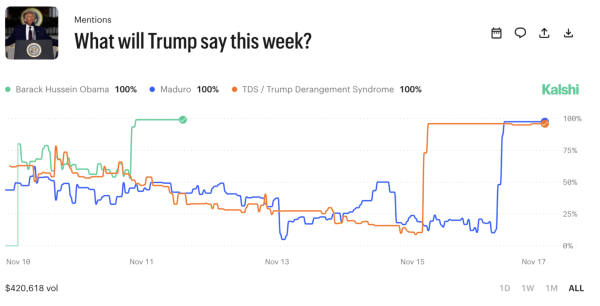
Kalshi Market for “What will Trump say this week” (Captured 4/17/26)
The draw of “prediction markets” is that they technically aren’t betting, at least according to the companies themselves. In advertisements, which appear everywhere from online to television to the radio, the companies describe the legitimacy of their operations. Polymarket refers to the actions users take as “trading” rather than betting. Similarly to the stock market, users buy shares of what they believe will happen at a certain price. As more money flows into the market, share prices rise and fall based on volume. Users are also able to sell their shares before the resolution of the event, offering an edge over traditional sports betting. There is no “house” in prediction markets. The companies take a small percentage of money off of every transaction, allowing users to shape the odds.
The Ohio state government does not agree with the stance of the companies. The Ohio Casino Control Commission stated that “Kalshi’s refusal to stop offering sports gaming in Ohio necessitated the Commission to take action to uphold the requirements of Ohio law.” The commission believes that Kalshi does not meet state law regarding sports betting, including being open to 18-year-olds, while Ohio only allows people 21 and older to bet on sports. The OCCC publicly stated that they intend to hit the company with a 5 million dollar fine.
Regardless of how the legal battle shapes out, “prediction markets” allowing high school students to bet on sports games, weather, and political outcomes present grave dangers to residents. As Mr. Malek so strongly presented, gambling can be very dangerous to young minds, especially when alternative betting options are offered. In our world, the last thing we want available to 18-year-olds is the opportunity to legally bet on anything they see fit. At that age, minds are not fully developed, and legal access to the addictive nature of gambling can only result in bad outcomes.